My Foundry™ · Vendor discovery
A technology vendor engaged Forever Foundry, asking to “create an organisational adoption intelligence layer.”
01 of 28 · Campaign purpose
Identifying where platform value becomes commercially and operationally meaningful to the customer.
Through organisational visibility, user alignment and stakeholder understanding.
02 of 28 · The Vendor X Value Realisation Compass
The Vendor X Value Realisation Compass.
03 of 28 · The adoption intelligence layer
The adoption intelligence layer.
Enabling value realisation through end-user insight, evidence-based prioritisation and stakeholder alignment.
04 of 28 · The core challenge
What adoption challenge are we most trying to solve?
“Customers are not fully realising value from their Vendor investment beyond the traditional virtualisation conversation. The market still sees Vendor primarily through a vSphere lens, whereas the strategic conversation is increasingly around broader platform outcomes.”
Partners and customers remain stuck in [Vendor ‘X’ feature]. The broader platform story: automation, resilience, AI readiness, isn’t landing.
Limited adoption of the wider stack post-renewal, despite licensing changes pushing toward an integrated platform-led model.
The gap is not deployment capability, it is identifying where broader platform value becomes operationally and commercially relevant.
Partners often lack organisational visibility within customers, making it hard to navigate and position consulting-depth conversations.
05 of 28 · Ideal beneficiaries
Who is the primary beneficiary of the pilot?

The engagement must remain outcome-led for the customer first, otherwise it risks being perceived as a vendor-led expansion exercise rather than a genuine value-realisation activity.

Partners gain contact surface area, organisational visibility, consulting-depth capability, and a structured framework to navigate complex customer environments beyond technical assessment.

Accelerated platform adoption, higher renewal confidence, and VCF-led model traction, driven by real adoption intelligence rather than assumption.

Key insight: outcome-led customer engagement is the non-negotiable foundation. Partner enablement and commercial return follow, they cannot lead.
06 of 28 · Ideal partner profile
Which partner profile makes the strongest proof-of-concept?
Strongest fit criteria

Multiple stakeholder groups across IT, architecture, operations and business.

Renewal is complete but adoption depth is unclear, a prime moment for insight gathering.

Partner lacks broad organisational visibility within the customer. AI Compass™ fills the gap.

Accounts open to a consulting-depth conversation beyond the traditional technical assessment.
Operationalisation considerations
07 of 28 · Compass participation model
Who participates in the Compass process?
Recommended participant groups
Business direction, investment decisions, transformation mandate.
Platform strategy, vendor relationships, adoption accountability.
Technical depth on platform deployment, operational maturity.
Day-to-day friction, automation gaps, resilience pain points.
Future-state design, integration dependencies, AI readiness.
Why this split resonates
The split between executive and platform personas particularly resonated, aligning closely to existing thinking within our own programmes.
Executives hold the mandate. Platform teams hold the operational truth. Compass captures both.
Compass is bespoke to each engagement. Questions, dimensions and scoring are configured around the vendor platform lifecycle stage and account context.
08 of 28 · Partner positioning
How should this be positioned to partners?
 Value realisation
Frame as a value-realisation accelerator, not a product upsell. Partners help customers understand what their investment is and isn’t delivering.
Adoption accelerationProvides structured intelligence to accelerate vendor platform adoption, turning ambiguous post-renewal situations into actionable roadmaps.
 Customer understanding
Fills the organisational visibility gap that most partners have. Compass surfaces blockers, personas and priorities that technical assessments cannot.
 Strategic account depth
Elevates the partner’s engagement from reactive technical support to proactive consulting, differentiating them in a crowded market.
The biggest capability gap in the partner ecosystem is not technical, it is organisational understanding and consulting-depth engagement. The Forever Foundry Process™ closes this gap.
09 of 28 · The Foundry Process, vendor application
How Forever Foundry solves this.
Clarify
AI Compass™The problem
Customers don’t know where platform value is being lost. Partners lack org-wide visibility.
The solution
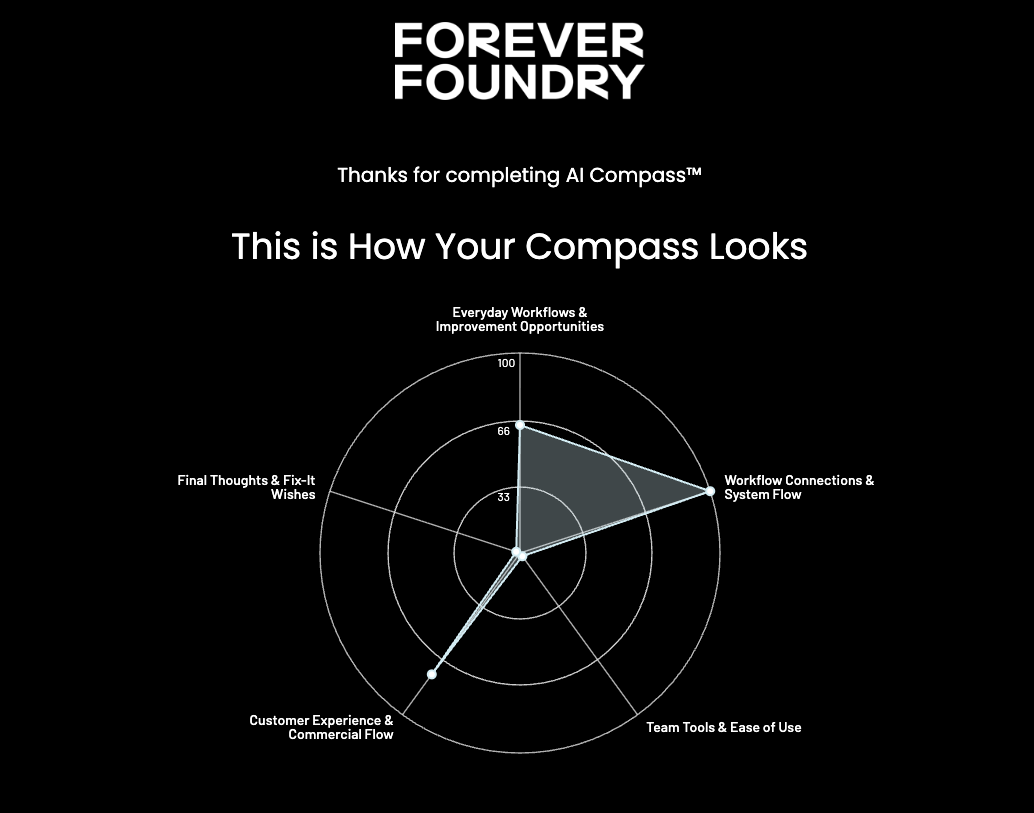
A bespoke, configurable survey deployed across all participant groups, capturing quantitative scores and qualitative insight across vendor-specific dimensions: operational maturity, automation readiness, adoption blockers, resilience gaps and AI readiness.
Prioritise
Slid3rs™The problem
Long backlogs, political prioritisation, and misaligned business/IT priorities.
The solution
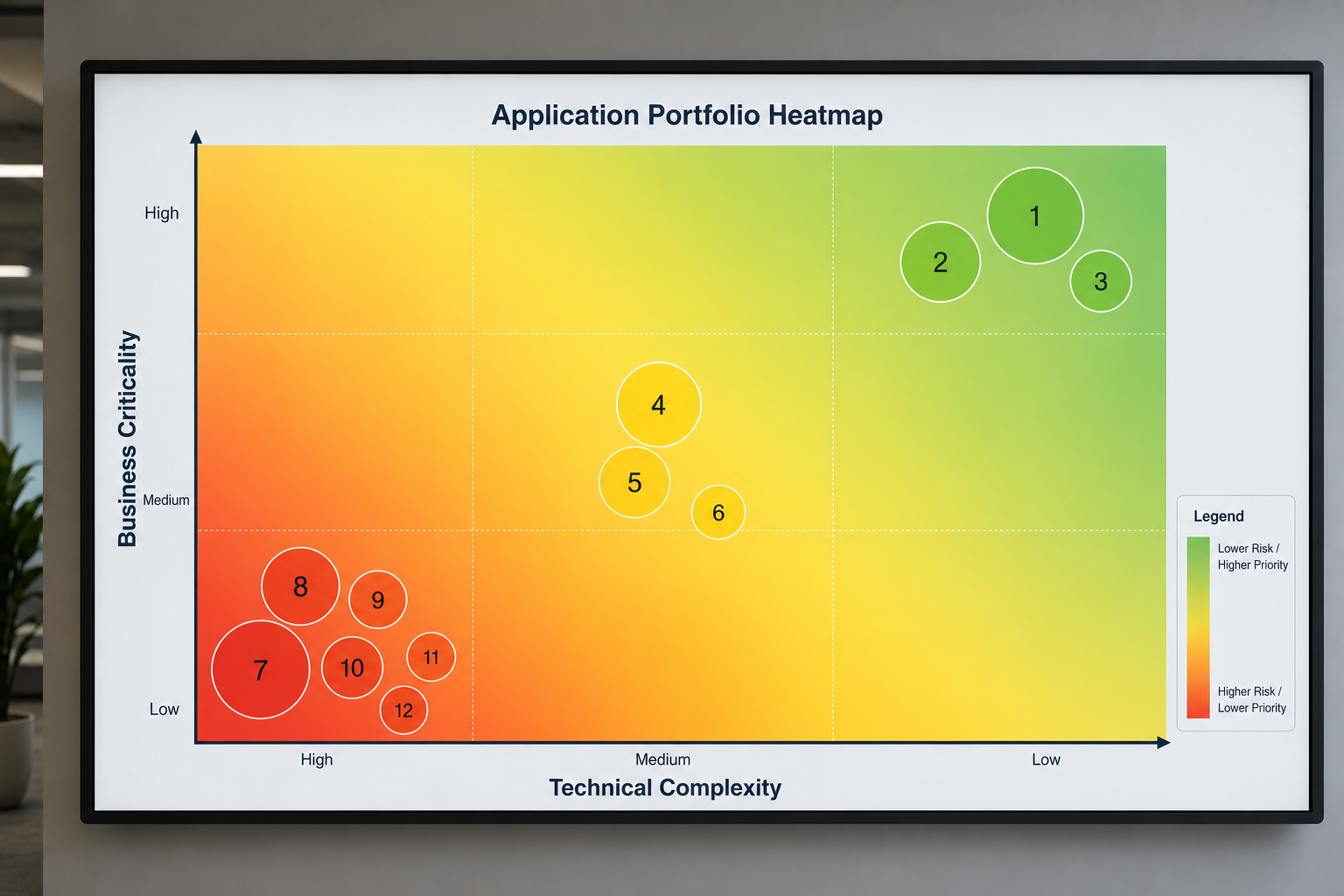
Compass data is converted into a heat-mapped portfolio scored by business criticality and technical complexity. Replaces gut-feel and stakeholder politics with a defensible, evidence-based decision framework.
Align
FlowRoom™The problem
Teams in silos. Strategy in documents. Adoption stalling before it starts.
The solution
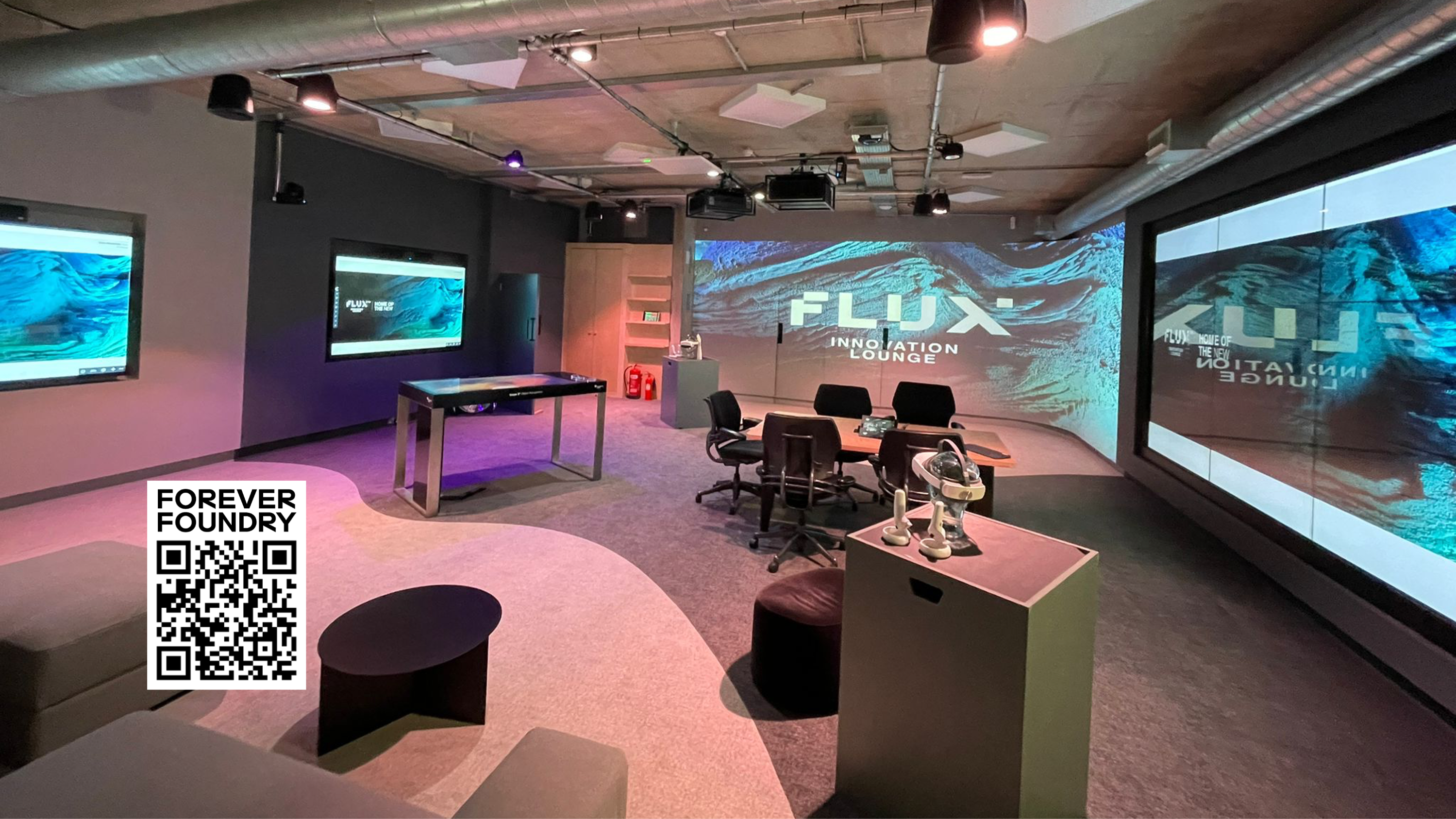
An immersive, facilitated strategy session for 6–30 people, activating real decision-making through physical and digital engagement. Breaks down silos between IT and business stakeholders in real time.
10 of 28 · Compass configuration
What would a [Vendor X]-native Compass specifically measure?
 Operational maturity
How effectively are day-to-day platform operations run? Where are the bottlenecks and manual dependencies?
Automation readinessHow mature is the organisation’s use of automation tooling? What is holding back wider adoption?
Platform adoption depthWhich platform components are in active use vs. licensed but dormant? Where is the adoption gap widest?
Resilience & securityHow confident are teams in the platform’s resilience posture and security alignment across network, storage and compute?
Stakeholder confidenceDo executive and business stakeholders believe the platform is delivering on its transformation promise?
AI & cloud readinessHow prepared is the environment to support AI workloads, private cloud operating models and modern application deployment?
11 of 28 · Recommended next steps
We had some clear next actions to move forward.
Agree where in the vendor customer lifecycle the Compass engagement sits: pre-renewal, post-renewal, or mid-adoption.
Collaboratively define the 5–7 vendor-native dimensions for the pilot Compass, based on the account context.
Identify a large or complex post-renewal account with unclear adoption depth and multiple stakeholder groups.
Align on what 30/60/90-day success looks like: adoption depth scores, stakeholder engagement rates, identified opportunities.
12 of 28 · From pilot to programme, the scale model
The Big Idea: from one pilot account to a vendor-wide channel partner intelligence engine.
The FlowRoom: multi-cohort configuration
13 of 28 · The original idea
The original AI Compass™ design: a technology assessment.
We started with adoption, automation, security and resilience, a survey focused on the technology already in view, not the business pain behind it.
Click each category to see the question it was actually asking.
Every category assumes the respondent knows, and cares about, the vendor’s own components. These questions surface technology maturity, not business pain, and it is business pain that starts the value conversation.
All eight original categories, retained here as a comparison.
14 of 28 · The pivotal reframe
The mistake: customers do not experience technology. They experience business problems.
Work takes too long. Teams repeat tasks. Decisions wait for information. That is where the customer’s story begins.
Illustrative examples of everyday friction.
15 of 28 · A different question
Don’t ask about the technology. Ask about the job.
We asked about the work: where it slows down, what gets in the way and what a better outcome would mean. The questions stayed open.
Manufacturing Compass
Then you discover whether SAP, Mendix, Power Apps, Excel, email or manual workarounds are involved. The technology reveals itself through the problem.
Vendor Compass
Then you discover provisioning takes three weeks, approvals are manual, and the automation capability already exists in the licence, unused and unknown.
The technology should be invisible to the respondent. The vendor, Mendix, SAP, Power Apps, Excel: none appear in the survey. The respondent talks about their job. Forever Foundry maps the answers to the capability that solves it.
Proposed question examples. Vendor-neutral questions reduce product framing.
16 of 28 · The reframe
From technology categories to customer outcome categories.
Every technology category has a customer outcome behind it. Reframing the question changes who can answer it, and what it reveals.
17 of 28 · The new framework
Seven customer outcome categories. No vendor jargon. No technology assumptions.
The vendor’s technology only surfaces in the interpretation layer, never in the questions themselves.
18 of 28 · Why this approach is valuable
The technology reveals itself through the problem.
An operations manager, a CFO, a department head: none of them need to know what the platform is. They answer about their job. Every voice becomes a valid data point.
Customers don’t know what an automation capability can solve. But when they say provisioning takes three weeks, the vendor can respond: you already own the capability to fix that.
Outcome scores become Slid3rs™ input, ranked by business impact and mapped to capabilities: an evidence-based roadmap grounded in what the customer said, not what a vendor assumed.
The respondent never needs to know what the vendor is. That is the point.
19 of 28 · The signal in customer language
The pain arrives in the customer’s own words.
That statement opens a business conversation about delayed work, dependencies and the cost of waiting.
“A new developer environment goes through three approval layers and takes three to four weeks.”
Quotation excerpt from source material. No financial value is assigned without evidence.
20 of 28 · From pain to a possible response
The Forever Foundry Process™ connected the problem to relevant capabilities.
We interpret the business pain, examine its causes and map the requirement to capabilities that could help. The platform becomes relevant through the problem the customer wants to solve.
Click each step to continue the chain.
Separate step
Validate the fit
A capability match is a hypothesis. Check dependencies, existing tools and process causes before assuming a fit.
A capability match is a hypothesis: validate dependencies, existing tools and process causes.
21 of 28 · Opportunity discovery
AI Compass™ finds opportunities in the evidence.
Customer responses become a structured view of business pain. Each opportunity needs a clear problem, supporting evidence and an outcome worth pursuing.
A platform upgrade has not been explained in terms the board recognises.
Environments take three to four weeks; developers use personal cloud accounts to avoid waiting.
Routine patching and repetitive work consume skilled engineers.
A recent recovery test went well, but segmentation remains incomplete.
Processes make it hard for teams to get what they need.
Business trust has not recovered after past incidents.
The board’s AI ambition may exceed current operating capability.
Click a dimension to inspect its response.
22 of 28 · Choosing what matters
Slid3rs™ turns opportunities into priorities.
Stakeholders weigh business value, complexity and strategic alignment, making the trade-offs visible.
Demonstration priorities, not computed Slid3rs™ results.
23 of 28 · Reaching agreement
FlowRoom® aligns the people who must act.
Stakeholders examine the evidence together, agree what to pursue and identify the decisions needed to move forward.
Proposed and illustrative. No workshop has taken place.
24 of 28 · Creating action
The roadmap makes the next move clear.
Priorities become sequenced actions with owners, dependencies and measures of success.
Proposed design detail, not committed dates or names.
25 of 28 · Customer value
A clearer basis for the next decision.
The customer gains a shared understanding of business pain and an evidence-based roadmap.
Clarity across functions, traceable decisions and a plan the organisation can own. Realised benefits are verified after delivery, not assumed at the diagnostic.
26 of 28 · Vendor value
Demand starts with a recognised customer problem.
The vendor can connect relevant capabilities to evidenced needs and reach more stakeholders around a defined outcome.
Demand creation, adoption, stakeholder expansion and a roadmap that supports tracking value realisation. These are commercial objectives, not guaranteed results.
27 of 28 · Partner value
Partners enter the conversation earlier.
Discovery creates upstream access while the customer is defining the problem.
Upstream access, qualified requirements and a stronger basis for shaping delivery opportunities. An identified opportunity is not booked revenue.
28 of 28 · The new design
From technology assessment to customer outcome intelligence.
Customer language reveals the pain. AI Compass™ finds opportunities, Slid3rs™ prioritises them and FlowRoom® aligns stakeholders. The roadmap creates action.